What Does the Tire Pressure Light Mean? Causes & What to Do
If the tire pressure light comes on in your vehicle, it usually means one or more of your tires may have air pressure that is too low—or that there may be a problem with the tire pressure monitoring system (TPMS).
The warning light often looks like a horseshoe or tire shape with an exclamation point in the middle.
So, what does the tire pressure light mean?
In many cases, it means one or more tires are underinflated. However, the light can also come on because of a slow tire leak, a damaged tire, a change in outside temperature, or a problem with a TPMS sensor.
Ignoring the warning can lead to uneven tire wear, reduced handling, lower fuel economy, and potentially tire damage.
At Apex Automotive Care, we provide tire and automotive services for drivers throughout Houston and surrounding communities, including Southwest Houston, Westchase, Bellaire, Meyerland, Stafford, Sugar Land, and Missouri City.
What Does the Tire Pressure Light Look Like?
The tire pressure warning light is usually shaped like a partially open circle or horseshoe with an exclamation point inside.
It may illuminate in yellow or amber, depending on the vehicle.
When the light comes on, it generally means the vehicle's TPMS has detected that tire pressure is outside the expected range.
Some vehicles will also display the specific tire pressure on the dashboard or infotainment screen.
If your vehicle provides individual tire-pressure readings, check them when the warning appears.
Why Is My Tire Pressure Light On?
There are several reasons your tire pressure warning light may come on.
1. One or More Tires Are Low
The most common reason for a tire pressure warning is simply low air pressure.
A tire can lose pressure naturally over time, especially as the temperature changes.
Underinflated tires can affect:
- Handling
- Braking
- Fuel economy
- Tire wear
- Ride quality
- Tire temperature
Check your tire pressure against the vehicle manufacturer's recommended specification.
The correct pressure is generally found on the driver's door-jamb label or in the owner's manual—not necessarily on the tire's sidewall.
2. A Tire Has a Slow Leak
If you fill your tire with air and the warning light keeps coming back, you may have a slow leak.
Possible causes include:
- Nail or screw in the tire
- Puncture
- Damaged valve stem
- Wheel damage
- Bead leak
- Tire damage
- Corrosion around the wheel
A slow leak shouldn't be ignored.
Continuously adding air may temporarily restore pressure, but it doesn't address the reason the tire is losing air.
3. Cold Weather Lowered Tire Pressure
Temperature changes can affect tire pressure.
When the outside temperature drops, the air inside your tires contracts, which can cause the measured tire pressure to decrease.
This is one reason you may see the tire pressure warning light come on during a colder morning even if the tires didn't appear to have a problem the day before.
However, don't assume temperature is always the explanation.
If one tire is significantly lower than the others, the tire should be inspected for a possible leak.
4. A Tire Is Damaged
A damaged tire may lose air slowly or rapidly.
Inspect your tires for visible signs such as:
- Bulges
- Cuts
- Cracks
- Punctures
- Uneven tread wear
- Objects stuck in the tread
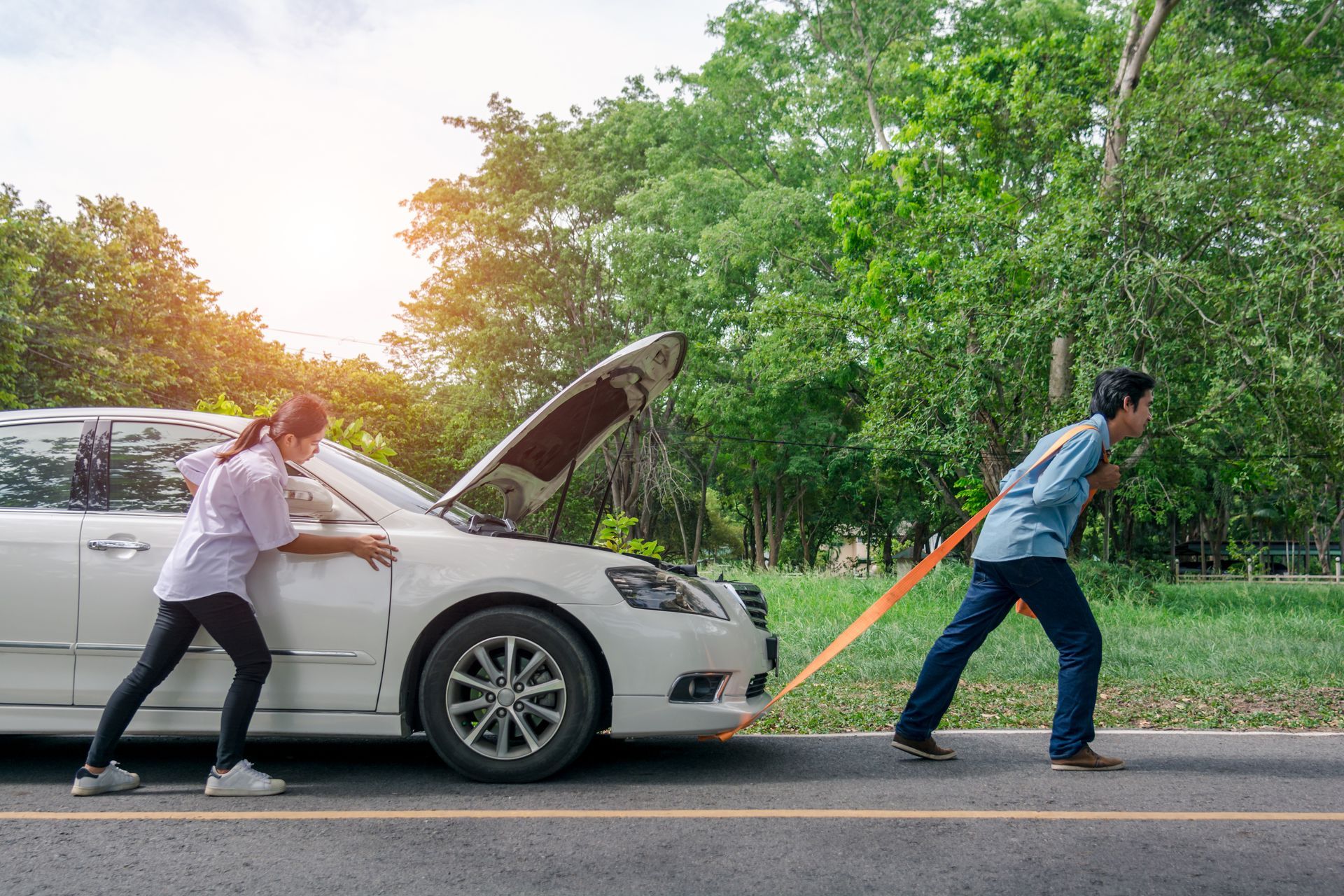
If a tire is severely damaged or rapidly losing air, avoid driving on it.
A damaged tire can create a safety concern, particularly at highway speeds.
5. TPMS Sensor Problem
Your vehicle's tire pressure monitoring system uses sensors to monitor tire pressure.
If a sensor stops communicating properly, the TPMS warning may illuminate even when the tires are properly inflated.
A TPMS problem may be more likely if:
- The light remains on after correcting tire pressure
- The vehicle displays a TPMS warning message
- Tire pressure readings are missing
- The warning light flashes before staying on
- A sensor was recently replaced or damaged
The system may require diagnostic testing to determine whether the issue is a sensor, communication problem, or another component.
What Should I Do When the Tire Pressure Light Comes On?
Don't ignore it.
Start by checking the pressure in all four tires—and the spare if your vehicle is equipped with a TPMS-equipped spare.
Compare the readings with the recommended tire pressure listed by the vehicle manufacturer.
If a tire is low, inflate it to the correct specification.
Then monitor the tire.
If the pressure drops again, the tire should be inspected for a leak.
Can I Drive With the Tire Pressure Light On?
It depends on how low the tire pressure is and whether the tire appears damaged.
If the tire pressure is only slightly low, you may be able to carefully drive to a location where you can properly inflate or inspect the tire.
However, don't continue driving normally if a tire is severely underinflated.
Stop and inspect the tire if you notice:
- A visibly low tire
- Severe vibration
- Pulling
- Tire damage
- A bulge or bubble
- Rapid air loss
- Significant changes in handling
Driving on a severely underinflated or damaged tire can cause additional damage.
Why Does My Tire Pressure Light Keep Coming Back?
If the tire pressure light repeatedly returns after you've added air, something may be causing the pressure to drop.
Possible causes include:
- Slow puncture
- Valve stem leak
- Wheel leak
- Damaged tire
- Incorrect tire pressure
- TPMS sensor problem
If the same tire repeatedly loses air, don't simply keep adding air.
Have the tire and wheel inspected to find the source of the leak.
Why Is One Tire Losing Air but the Others Are Fine?
When one tire repeatedly loses pressure while the others remain properly inflated, a leak becomes more likely.
The leak may be caused by a puncture, valve stem, wheel issue, or tire damage.
For example, a small nail or screw can remain embedded in the tread and cause a very slow loss of pressure.
A professional tire inspection can help identify the source.
Why Does My Tire Pressure Light Come On in the Morning?
If your tire pressure warning appears primarily in the morning, temperature may be playing a role.
Cooler temperatures can cause tire pressure readings to drop.
However, if the light continues appearing or one tire consistently reads lower than the others, have the tires checked for leaks.
A temperature change shouldn't be used as a reason to ignore a tire that is repeatedly losing air.
Why Is My Tire Pressure Light Flashing?
A flashing TPMS light can mean something different from a steady tire-pressure warning.
On many vehicles, a flashing light can indicate a problem with the tire pressure monitoring system itself rather than simply low tire pressure.
Possible causes can include:
- Failed TPMS sensor
- Sensor battery failure
- Communication problem
- TPMS system fault
- Sensor replacement that hasn't been properly programmed
The exact warning behavior varies by vehicle, so consult the owner's manual and have the system diagnosed if the light continues flashing.
Does Tire Pressure Affect Fuel Economy?
Yes.
Underinflated tires can increase rolling resistance, which can make the engine work harder to move the vehicle.
Keeping your tires properly inflated can help maintain the vehicle's intended handling and efficiency.
Correct tire pressure is also important for maintaining even tire wear.
However, don't inflate your tires above the manufacturer's recommended pressure simply to try to improve fuel economy.
Follow the vehicle manufacturer's specifications.
Can Low Tire Pressure Cause Uneven Tire Wear?
Yes.
Underinflation can contribute to uneven tread wear and can cause the tire to flex more than intended.
Over time, incorrect tire pressure can shorten tire life and affect how the vehicle handles.
Checking your tire pressure regularly can help identify pressure problems before they contribute to premature tire wear.
Does Tire Pressure Affect How My Car Drives?
It can.
Incorrect tire pressure can affect the way your vehicle feels on the road.
You may notice:
- Heavier steering
- Poorer handling
- Increased road noise
- Uneven ride quality
- Pulling
- Uneven tire wear
If your vehicle feels different after the tire pressure warning appears, have the tires and wheels inspected.
What Is the Correct Tire Pressure for My Car?
The correct tire pressure depends on the vehicle.
Don't automatically use the maximum pressure printed on the tire sidewall.
Instead, look for the manufacturer's recommended tire pressure on:
- The driver's door-jamb sticker
- The vehicle information label
- The owner's manual
Some vehicles specify different pressures for the front and rear tires.
Always follow the vehicle manufacturer's recommendation.
Does Tire Rotation Help With Tire Pressure Problems?
Tire rotation does not directly correct low tire pressure.
However, regular tire rotation is an important part of tire maintenance because it can help promote more even tread wear.
A tire rotation can also give technicians an opportunity to inspect the tires for unusual wear, damage, or other problems.
Apex Automotive Care includes tire rotations among the maintenance items that may be addressed as part of factory-recommended service.
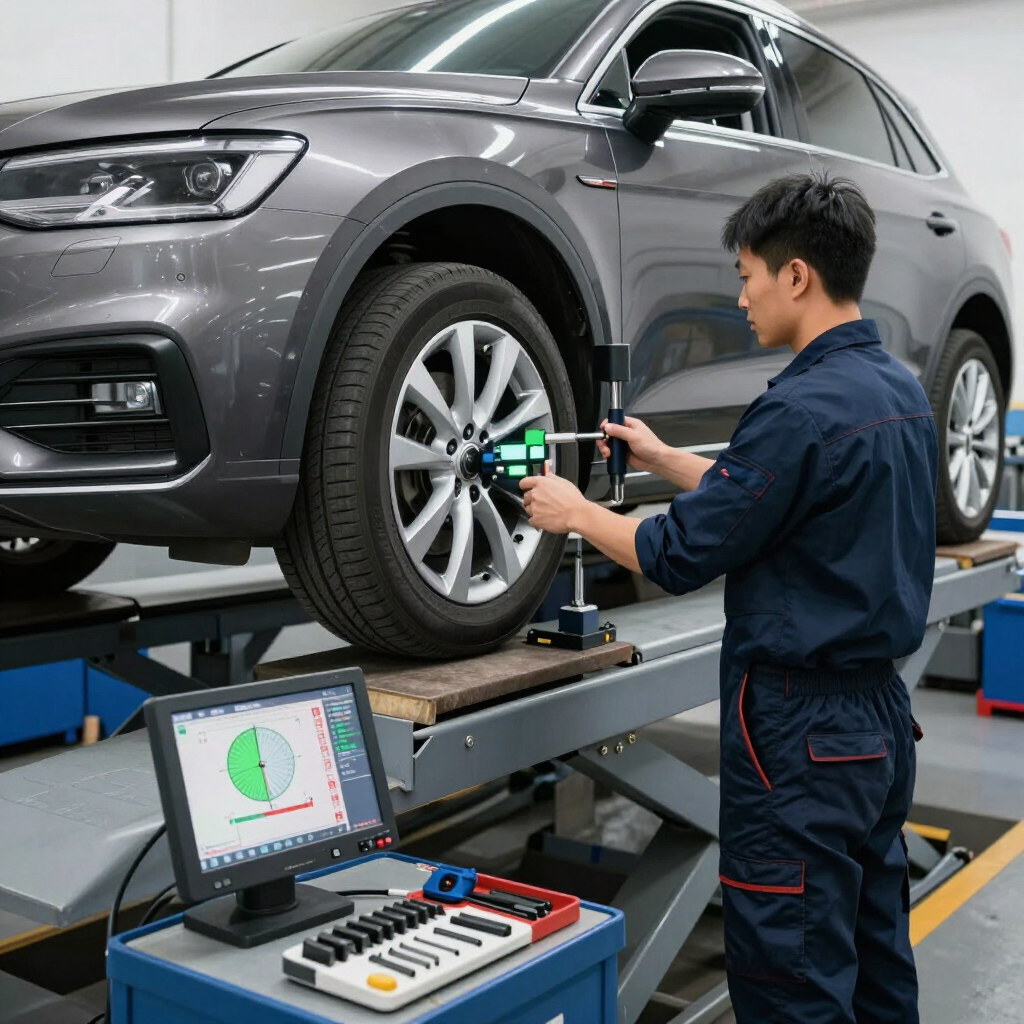
Can a Wheel Alignment Cause the Tire Pressure Light to Come On?
A wheel alignment problem generally does not directly trigger the tire pressure warning light.
However, alignment problems can cause uneven tire wear.
If your tire pressure light is on and you also notice:
- Your car pulling to one side
- An off-center steering wheel
- Uneven tire wear
- Vehicle wandering
- Steering changes
the tires and alignment should both be evaluated.
How Is a Tire Pressure Problem Diagnosed?
A proper tire and TPMS inspection can involve several steps.
Step 1: Check All Tire Pressures
The actual pressure in each tire is measured and compared with the manufacturer's recommended specification.
Step 2: Inspect the Tires
The tires can be checked for:
- Punctures
- Cuts
- Bulges
- Uneven wear
- Tread damage
- Sidewall damage
Step 3: Check for Leaks
If a tire is losing pressure, it can be tested for leaks around the tread, sidewall, valve stem, and wheel.
Step 4: Inspect the Wheels
A damaged or bent wheel can sometimes contribute to air loss.
Step 5: Diagnose the TPMS
If the tire pressures are correct but the warning remains on, the TPMS sensors and related system may need to be tested.
Tire Pressure Light Repair in Westchase
If you're in Westchase and your tire pressure light keeps coming on, don't simply keep adding air.
Apex Automotive Care can inspect the tires, wheels, and TPMS to help determine why the warning keeps returning.
Tire Pressure Light Repair in Bellaire
For drivers in Bellaire, a tire-pressure warning may be caused by something as simple as a low tire or something more involved such as a slow leak or TPMS issue.
An inspection can help identify the actual cause.
Tire Pressure Light Repair in Meyerland
If you're in Meyerland and notice the tire pressure warning light, check all four tires and pay attention to whether one tire continues losing pressure.
A recurring low tire should be inspected rather than repeatedly inflated without finding the cause.
Tire Pressure Light Repair in Stafford
Drivers in Stafford who see the tire pressure light during their commute should check their tire pressures before continuing to drive long distances.
If the light returns after inflation, have the tire inspected for a leak.
Tire Pressure Light Repair in Sugar Land
If you're in Sugar Land and your TPMS warning light continues appearing, Apex Automotive Care can inspect the tires, wheels, and tire pressure monitoring system.
Tire Pressure Light Repair in Missouri City
Drivers in Missouri City experiencing a tire-pressure warning can have their tires checked for pressure loss, punctures, damage, uneven wear, and other potential problems.
Tire Pressure Light Repair in Southwest Houston
For drivers looking for tire service in Southwest Houston, Apex Automotive Care is located at:
7050 Southwest Freeway
Houston, TX 77074
Our team can help inspect tire pressure concerns and related vehicle problems.
Frequently Asked Questions About the Tire Pressure Light
What does the tire pressure light mean?
The tire pressure light generally means one or more tires may have low pressure. It can also indicate a TPMS sensor or system problem.
Can I drive with the tire pressure light on?
If a tire is significantly underinflated or damaged, you should not continue driving normally. Check the tire pressures and inspect the tires as soon as possible.
Why does my tire pressure light keep coming on?
A recurring warning can be caused by a slow leak, puncture, damaged valve stem, wheel problem, incorrect tire pressure, or TPMS issue.
Why does my tire pressure light come on when it's cold?
Cold temperatures can reduce tire pressure readings and may trigger the warning. If the light continues returning, check the tires for a leak.
Why is my tire pressure light flashing?
On many vehicles, a flashing TPMS warning can indicate a problem with the tire pressure monitoring system rather than simply low tire pressure.
Does the tire pressure light mean I have a flat tire?
Not necessarily. The light can come on because of slightly low pressure, a slow leak, a temperature change, or a TPMS problem. However, always inspect the tire for visible damage.
Can a nail cause the tire pressure light to come on?
Yes. A nail, screw, or other puncture can create a slow leak that gradually lowers tire pressure and triggers the warning light.
What PSI should my tires be?
Use the tire pressure recommended by your vehicle manufacturer. Check the driver's door-jamb label or owner's manual rather than relying on the maximum PSI printed on the tire.
Can low tire pressure cause uneven tire wear?
Yes. Driving with incorrect tire pressure can contribute to uneven tread wear and reduced tire life.
Where can I get my tire pressure light checked in Houston?
Apex Automotive Care provides tire inspections and automotive repair at 7050 Southwest Freeway, Houston, TX 77074, serving Southwest Houston, Westchase, Bellaire, Meyerland, Stafford, Sugar Land, and Missouri City.
Don't Ignore the Tire Pressure Light
The tire pressure light is a warning that deserves attention.
It may be something simple, such as needing to add air, but it can also indicate a slow leak, damaged tire, wheel problem, or TPMS issue.
Checking the tire pressure and having recurring problems inspected can help protect your tires and maintain proper handling.
At Apex Automotive Care, we can inspect your tires, wheels, and related systems to help determine what's causing the warning.
Apex Automotive Care
📍
7050 Southwest Freeway, Houston, TX 77074