Can I Drive My Car If It's Overheating?
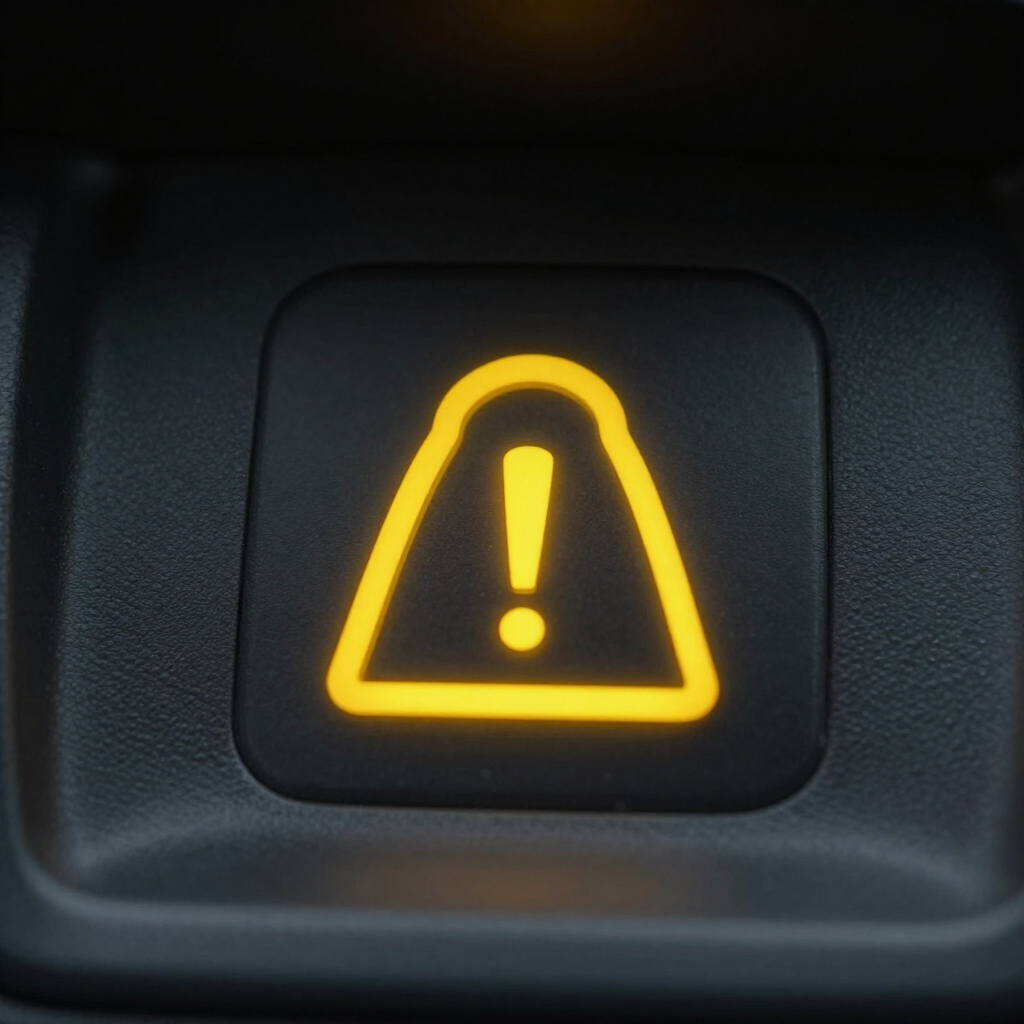
If your temperature gauge is climbing toward the red, a temperature warning light appears, or you see steam coming from under the hood, you may be wondering:
Can I drive my car if it's overheating?
In most situations, you should not continue driving an overheating vehicle.
Continuing to drive while the engine is overheating can turn a cooling-system problem into serious engine damage. What starts as low coolant, a leaking hose, a thermostat problem, or a cooling-fan issue could potentially lead to a damaged head gasket, warped engine components, or major internal engine damage.
If your vehicle begins overheating, find a safe place to pull over, turn off the engine, and allow the vehicle to cool.
Never remove the radiator cap while the engine is hot. The cooling system can be under pressure, and hot coolant or steam can cause severe burns.
At Apex Automotive Care, we diagnose overheating and cooling-system problems for drivers throughout Houston, Southwest Houston, Westchase, Bellaire, Meyerland, Stafford, Sugar Land, and Missouri City.
Is It Safe to Drive an Overheating Car?
Generally, no.
An engine is designed to operate within a specific temperature range. The cooling system circulates coolant and releases heat to keep the engine within that range.
When the cooling system can no longer control engine temperature, the temperature can continue climbing.
Driving the vehicle in that condition risks additional damage.
The safest response is to stop driving when it is safe to do so and determine why the vehicle is overheating.
This is especially important if you notice:
- Temperature gauge in the red
- Engine temperature warning
- Steam from under the hood
- Coolant leaking underneath the vehicle
- Strong coolant smell
- Loss of engine power
- Unusual engine noises
- Multiple dashboard warning lights
Don't assume you can make it home simply because the engine is still running.
What Should I Do If My Car Starts Overheating While Driving?
If your car starts overheating while you're on the road, don't panic—but don't ignore it either.
1. Watch the Temperature Gauge
If the gauge is rapidly climbing toward the hot or red area, take the warning seriously.
Some newer vehicles may display a warning message instead of a traditional temperature gauge.
2. Find a Safe Place to Pull Over
Move away from traffic when it is safe to do so.
Don't continue driving several miles simply because your destination is nearby.
3. Turn Off the Engine
Once you're safely stopped, shut the engine off.
This stops the engine from continuing to generate heat.
4. Allow the Vehicle to Cool
Give the engine sufficient time to cool before inspecting anything under the hood.
5. Never Open a Hot Radiator Cap
Do not remove the radiator cap while the cooling system is hot.
Hot coolant can be under significant pressure and can cause serious burns if the cap is removed prematurely.
6. Decide Whether the Vehicle Needs Transportation
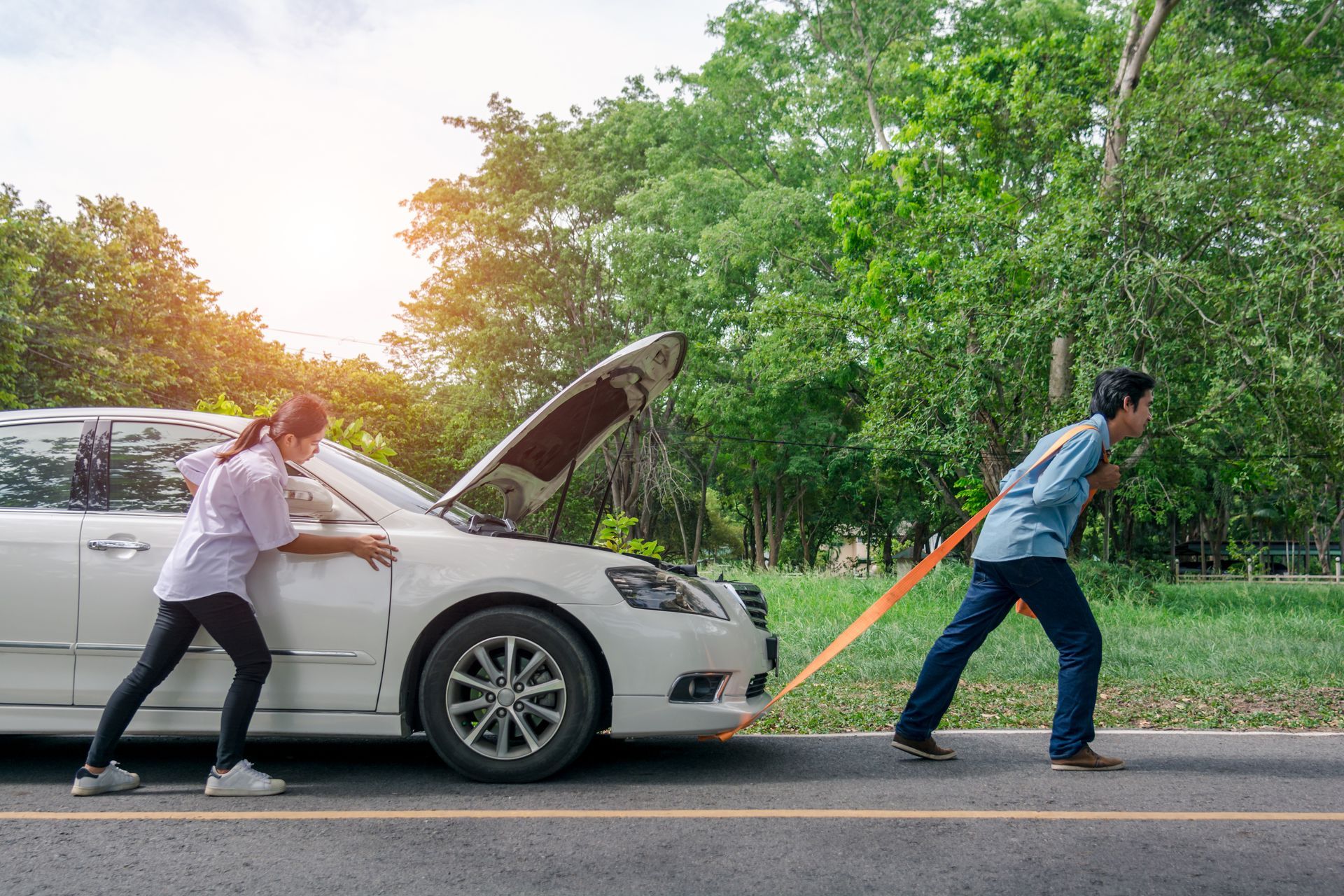
If the vehicle has seriously overheated, is losing coolant, continues overheating after cooling down, or has another significant cooling-system problem, arranging transportation or towing is preferable to risking engine damage.
How Long Can You Drive an Overheating Car?
There is no safe universal distance you can drive an overheating vehicle.
You shouldn't assume you have:
- 1 mile
- 5 miles
- 10 miles
- 20 minutes
- Enough time to get home
How quickly damage occurs depends on the cause of the overheating, how high the temperature becomes, the engine design, coolant level, outside conditions, and several other factors.
The important point is that once the engine is overheating, every additional minute of operation can potentially increase the risk of damage.
Rather than asking how far you can drive, focus on safely getting off the road and determining why the engine is running hot.
What Happens If I Keep Driving While My Car Is Overheating?
Continuing to drive an overheating engine can potentially cause increasingly serious damage.
Head Gasket Damage
The head gasket seals critical areas between the engine block and cylinder head.
Extreme engine temperatures can contribute to head-gasket problems.
Possible symptoms of a head-gasket problem can include:
- Persistent overheating
- Coolant loss
- White exhaust smoke
- Bubbles in the cooling system
- Engine misfires
- Poor engine performance
- Coolant and oil contamination
These symptoms can have other causes, so proper diagnosis is important.
Warped Cylinder Head
Excessive heat can cause metal engine components to distort.
A warped cylinder head can lead to sealing problems, compression issues, coolant loss, and expensive engine repairs.
Internal Engine Damage
Severe overheating can damage internal engine components.
What could have been a cooling-system repair may eventually become a major engine repair if the vehicle continues operating while excessively hot.
Engine Oil Breakdown
Engine oil helps lubricate and protect moving components.
Extreme heat can reduce the oil's ability to provide proper protection, increasing the risk of internal wear.
Complete Breakdown
Eventually, an overheating vehicle may shut down or become unable to continue operating.
That's why overheating should be addressed before the vehicle reaches that point.
Why Is My Car Overheating?
Several problems can cause an engine to run hotter than normal.
1. Low Coolant
Low coolant is a common cause of overheating.
Coolant absorbs heat from the engine and transfers that heat to the radiator.
If there isn't enough coolant in the system, the engine may not be able to maintain the correct operating temperature.
Low coolant often means there is an underlying problem that needs attention.
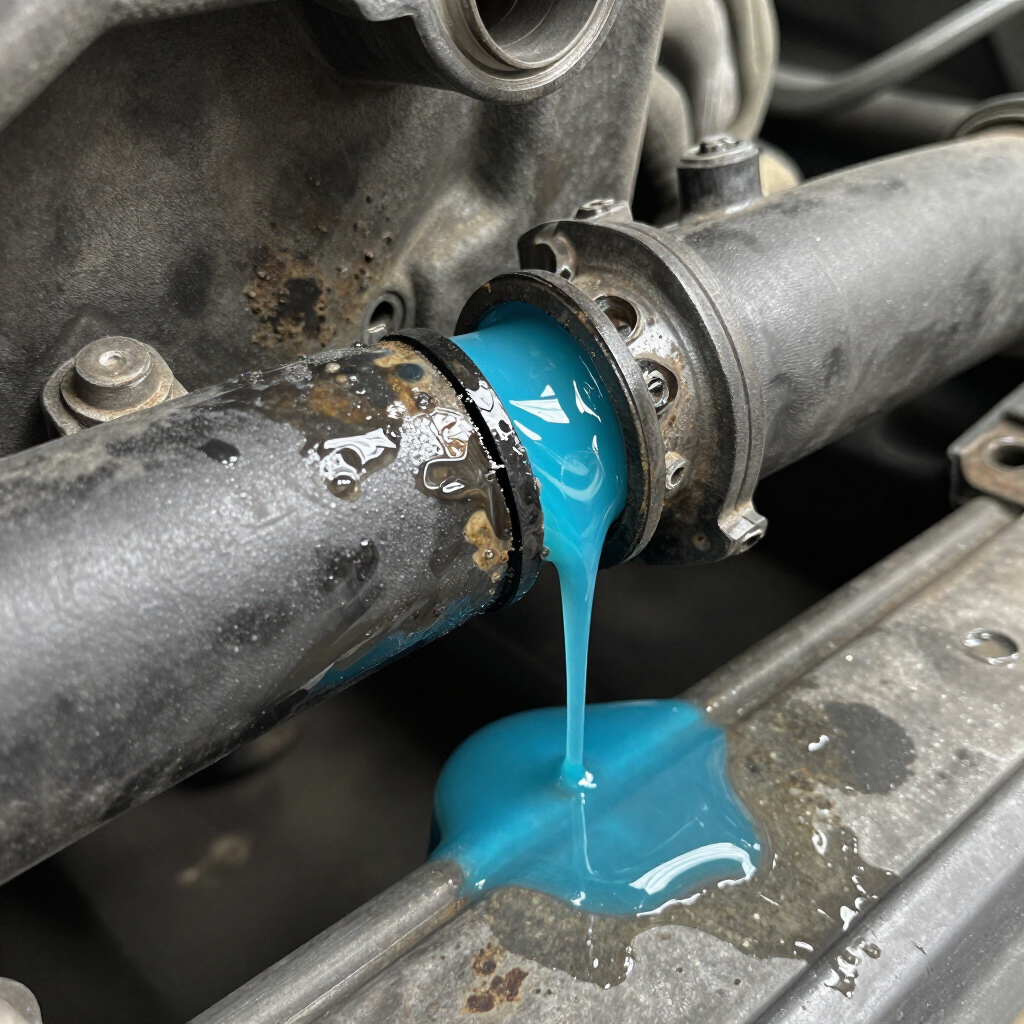
2. Coolant Leak
If your vehicle is losing coolant, eventually the coolant level may become low enough to cause overheating.
Possible leak sources include:
- Radiator
- Radiator hoses
- Heater hoses
- Water pump
- Thermostat housing
- Coolant reservoir
- Connections and seals
- Heater core
- Internal engine components
Some leaks leave obvious puddles.
Others may only leak when the engine is hot and the cooling system is pressurized.
If you're repeatedly adding coolant, find out why the coolant is disappearing.
For more information, read:
Why Is My Car Losing Coolant? Causes & Solutions | Houston Auto Repair
3. Bad Thermostat
The thermostat helps control coolant flow through the engine and radiator.
If the thermostat becomes stuck closed or otherwise fails to operate correctly, coolant circulation can become restricted.
That can cause engine temperature to rise rapidly.
Possible symptoms include:
- Overheating
- Temperature fluctuations
- Temperature warning light
- Poor heater performance in some situations
- Unusual temperature-gauge behavior
Because several cooling-system problems can cause similar symptoms, don't replace a thermostat based on symptoms alone.
4. Radiator Problem
The radiator releases heat from the coolant.
If the radiator is leaking, blocked, damaged, corroded, or unable to transfer heat properly, the engine may begin overheating.
Radiator problems can become especially noticeable during hot weather, long drives, or stop-and-go traffic.
5. Cooling Fan Failure
Cooling fans help pull or push air through the radiator when the vehicle needs additional airflow.
They're particularly important when you're:
- Sitting in traffic
- Idling
- Driving slowly
- Running the air conditioning
- Operating the vehicle in hot weather
If the cooling fan isn't working correctly, the vehicle may overheat while sitting still but cool down once you start moving.
Possible causes include:
- Failed fan motor
- Fuse problem
- Relay problem
- Wiring issue
- Temperature sensor problem
- Control-system problem
6. Water Pump Failure
The water pump circulates coolant through the engine and cooling system.
If it stops circulating coolant properly, engine temperatures can rise.
Possible water-pump symptoms can include:
- Overheating
- Coolant leaks
- Temperature fluctuations
- Unusual noises
- Poor coolant circulation
A water-pump problem should be diagnosed promptly because proper coolant circulation is essential for controlling engine temperature.
7. Damaged or Collapsed Hose
Cooling-system hoses carry coolant between the engine, radiator, and other components.
A hose that leaks, collapses, becomes restricted, or fails completely can interfere with coolant circulation.
A significant hose failure can cause rapid coolant loss and overheating.
8. Head Gasket Problem
Sometimes overheating isn't caused by an external cooling-system component.
An internal engine problem such as a head-gasket failure can cause persistent overheating and coolant loss.
Possible symptoms include:
- Repeated overheating
- Unexplained coolant loss
- White exhaust smoke
- Bubbles in coolant
- Engine misfires
- Poor engine performance
- Milky-looking engine oil
A head-gasket failure should be confirmed through proper testing rather than assumed from symptoms alone.
Why Does My Car Overheat in Traffic but Not on the Highway?
This is a common overheating pattern.
When you're driving at highway speeds, natural airflow passes through the radiator.
When you're sitting in Houston traffic, the cooling system relies more heavily on electric or mechanical cooling fans to move air across the radiator.
If the cooling fan isn't working correctly, the engine may:
- Run normally while moving
- Become hot while idling
- Overheat in traffic
- Cool down again after reaching highway speed
This pattern can point toward an airflow or fan problem, but other cooling-system problems can produce similar symptoms.
Proper diagnosis is still necessary.
Why Does My Car Overheat With the AC On?
Using the air conditioning places additional demands on the vehicle.
The condenser also releases heat near the radiator, making proper airflow especially important.
If your car only overheats when the AC is running, possible causes can include:
- Cooling-fan problems
- Restricted radiator airflow
- Low coolant
- Weak cooling-system performance
- Another underlying cooling-system issue
A properly functioning cooling system should generally be able to handle normal AC operation.
If turning on the AC causes the engine temperature to rise abnormally, have the vehicle inspected.
Why Does My Car Overheat and Then Go Back to Normal?
An engine temperature that repeatedly rises and falls can be caused by several issues.
Possible causes include:
- Thermostat problems
- Low coolant
- Air trapped in the cooling system
- Cooling-fan problems
- Water-pump problems
- Intermittent coolant circulation
- Temperature-sensor issues
Don't assume the problem has fixed itself simply because the temperature returns to normal.
Intermittent overheating still deserves diagnosis.
Why Does My Car Overheat but Have Coolant?
Having coolant in the reservoir doesn't guarantee that the cooling system is operating correctly.
The engine can still overheat because of:
- Thermostat failure
- Cooling-fan failure
- Water-pump problems
- Radiator restriction
- Air trapped in the system
- Poor coolant circulation
- Head-gasket problems
- Other cooling-system faults
This is why simply checking whether coolant is present isn't enough to diagnose an overheating engine.
Can Low Coolant Cause My Car to Overheat?
Yes.
Coolant is responsible for carrying heat away from the engine.
If the coolant level becomes too low, the system may not be able to effectively regulate engine temperature.
However, coolant shouldn't normally disappear continuously.
If you regularly need to add coolant, the vehicle should be inspected for a leak or another underlying problem.
Can I Add Coolant and Keep Driving?
Adding coolant may not solve the underlying problem.
If coolant became low because of a leak, adding more coolant doesn't repair the leak.
And if the overheating is caused by a failed water pump, thermostat, cooling fan, blocked radiator, or another problem, adding coolant may make little or no difference.
Most importantly, never open the radiator cap while the engine is hot.
If the vehicle has overheated, allow it to cool and have the cause properly evaluated before assuming it's safe to continue driving.
Can I Drive After My Car Cools Down?
The fact that the temperature has dropped doesn't necessarily mean the problem is gone.
The engine may cool simply because you turned it off.
Once you restart the engine, the same failed component or coolant leak may cause it to overheat again.
If the vehicle experienced significant overheating, continued driving can be risky without knowing the cause.
If the temperature begins climbing again after restarting, shut the engine off rather than repeatedly driving until it overheats.
Can I Drive With a Coolant Leak If My Car Isn't Overheating Yet?
A small coolant leak may not immediately cause overheating.
But as coolant continues escaping, the level can eventually become too low.
A small leak can also become a larger leak without much warning.
If your coolant level repeatedly drops, have the system inspected even if the temperature gauge currently appears normal.
Should I Turn the Heater On If My Car Is Overheating?
You may have heard that turning the heater on can help remove some heat from the cooling system.
While the heater core can transfer some heat away from the engine coolant, this should not be treated as a solution that allows you to continue driving an overheating vehicle.
If you're able to safely pull over, that's the priority.
Turning on the heater doesn't repair:
- A coolant leak
- Failed water pump
- Broken cooling fan
- Bad thermostat
- Damaged radiator
- Failed hose
- Head-gasket problem
The overheating still needs to be diagnosed.
How Do Mechanics Diagnose an Overheating Car?
Because many different problems can cause overheating, proper diagnosis matters.
Depending on the symptoms and vehicle, diagnosis may include:
Checking Coolant Level
The technician can verify coolant level and condition after the vehicle has safely cooled.
Inspecting for Coolant Leaks
The cooling system can be inspected for visible signs of leaks or coolant residue.
Cooling-System Pressure Test
Pressure testing may help identify leaks that aren't obvious during a visual inspection.
Checking the Radiator
The radiator can be inspected for leaks, damage, corrosion, restriction, and airflow problems.
Testing Cooling Fans
Technicians can determine whether the cooling fans operate when commanded.
Checking the Thermostat
Thermostat operation may need to be evaluated if coolant circulation appears abnormal.
Inspecting the Water Pump
The water pump can be evaluated for leaks, noise, circulation problems, and other signs of failure.
Inspecting Hoses
Cooling-system hoses can be checked for leaks, deterioration, damage, or restrictions.
Checking for Internal Engine Problems
If necessary, additional testing can help determine whether combustion gases or an internal engine problem are contributing to overheating.
The goal should be to determine why the engine overheated, rather than simply replacing parts based on a guess.
Why Proper Diagnosis Matters
An overheating engine doesn't automatically mean you need a radiator.
It doesn't automatically mean you need a thermostat.
And it doesn't automatically mean you have a bad head gasket.
Several cooling-system problems can create similar symptoms.
Replacing components without identifying the actual failure can waste money while leaving the original overheating problem unresolved.
Apex Automotive Care provides cooling-system inspections and repairs involving components such as the radiator, hoses, thermostat, water pump, coolant, and leaks.
Cooling System Repair in Houston, TX
Can Regular Maintenance Help Prevent Overheating?
Not every cooling-system failure can be prevented, but regular maintenance can help identify developing problems.
Pay attention to:
- Coolant level
- Coolant condition
- Fluid leaks
- Temperature-gauge changes
- Warning lights
- Hose condition
- Manufacturer maintenance intervals
Apex Automotive Care's general vehicle maintenance includes fluid services and routine inspections, while its factory scheduled maintenance follows manufacturer-recommended service intervals.
General Vehicle Maintenance in Houston, TX
Factory Scheduled Maintenance in Houston, TX
Why Houston Drivers Should Take Overheating Seriously
Houston driving can put significant demands on a vehicle's cooling system.
High outside temperatures combined with:
- Heavy traffic
- Long commutes
- Stop-and-go driving
- Extended idling
- Air-conditioning use
can make an existing cooling-system weakness more noticeable.
A properly functioning cooling system should still maintain the correct engine temperature during normal driving conditions.
If your vehicle starts overheating during Houston traffic or hot weather, don't dismiss it simply because it's hot outside.
The cooling system should be inspected.
Overheating Car Repair in Westchase
If your car is overheating while driving in Westchase, avoid continuing your commute as though nothing is wrong.
Pull over safely and allow the engine to cool.
Apex Automotive Care can inspect the cooling system to determine whether the problem involves coolant loss, the radiator, thermostat, water pump, cooling fans, hoses, or another component.
Overheating Car Repair in Bellaire
Drivers in Bellaire who notice their temperature gauge climbing should take the warning seriously.
Continuing to drive an overheating engine can potentially turn a cooling-system repair into a much larger engine repair.
Overheating Car Repair in Meyerland
If your vehicle starts running hot in Meyerland, pay attention to warning signs such as steam, coolant smells, leaks, or a temperature warning light.
Have the vehicle inspected before repeatedly driving it while overheating.
Overheating Car Repair in Stafford
If you commute from Stafford into Houston and your vehicle begins overheating, don't assume you can safely finish the drive.
Long-distance driving with an overheating engine can increase the risk of engine damage.
Overheating Car Repair in Sugar Land
Drivers in Sugar Land experiencing overheating should have the cooling system diagnosed rather than repeatedly adding coolant or waiting for the problem to disappear.
A coolant leak is only one of several possible causes.
Overheating Car Repair in Missouri City
If your vehicle is overheating in Missouri City, the problem may involve low coolant, a leak, thermostat, radiator, water pump, cooling fan, or another cooling-system component.
Proper testing can identify the actual cause.
Overheating Car Repair in Southwest Houston
Apex Automotive Care provides cooling-system diagnosis and auto repair for drivers throughout Southwest Houston.
Our shop is located at:
Apex Automotive Care
7050 Southwest Freeway
Houston, TX 77074
We serve drivers throughout Southwest Houston, Westchase, Bellaire, Meyerland, Stafford, Sugar Land, Missouri City, and surrounding Houston communities.
Frequently Asked Questions About Driving an Overheating Car
Can I drive my car if it's overheating?
You generally should not continue driving an overheating vehicle. Safely pull over, shut off the engine, and allow it to cool. Continuing to drive can potentially cause serious engine damage.
How far can I drive an overheating car?
There is no universally safe distance. The severity and cause of overheating vary, so continuing to drive risks additional damage.
Can I drive five minutes if my car is overheating?
There is no guarantee that driving another five minutes is safe. If the temperature is continuing to rise, safely stop the vehicle rather than trying to reach your destination.
What happens if I keep driving while my car is overheating?
Continued overheating can potentially damage the head gasket, cylinder head, engine oil, and internal engine components.
Should I turn my car off if it's overheating?
Once you have safely pulled over, shutting off the engine prevents it from continuing to generate heat.
Can I open the radiator cap if my car overheats?
Never remove a radiator cap while the cooling system is hot. Pressurized hot coolant can cause serious burns.
Can low coolant cause overheating?
Yes. Insufficient coolant can prevent the cooling system from effectively transferring heat away from the engine.
Why is my car overheating but it has coolant?
Possible causes include thermostat problems, water-pump failure, radiator restrictions, cooling-fan problems, poor coolant circulation, or internal engine problems.
Why does my car overheat in traffic but cool down while driving?
This pattern can sometimes indicate a cooling-fan or airflow problem because the radiator receives more natural airflow at higher vehicle speeds.
Why does my car overheat when the AC is on?
The AC increases heat load and cooling demands. If the cooling system is already weak or the cooling fans aren't operating correctly, engine temperature may increase when the AC is running.
Can I drive after my overheating car cools down?
Cooling down doesn't mean the underlying problem has been repaired. If the vehicle overheats again after restarting, stop driving and have the problem diagnosed.
Does overheating mean my engine is ruined?
Not necessarily. The amount of damage depends on how severely the engine overheated, how long it remained hot, and what caused the problem. Have the vehicle inspected before assuming the engine has major damage.
Where can I get an overheating car checked in Houston?
Apex Automotive Care provides cooling-system diagnosis and repair at 7050 Southwest Freeway, Houston, TX 77074, serving Southwest Houston, Westchase, Bellaire, Meyerland, Stafford, Sugar Land, Missouri City, and surrounding areas.
Don't Keep Driving an Overheating Car
If you're asking “Can I drive my car if it's overheating?”, the safest answer is to avoid continuing to drive it until you understand what's causing the excessive temperature.
The problem might be relatively straightforward, such as low coolant or a damaged hose.
It could also involve:
- Radiator failure
- Thermostat problems
- Cooling-fan failure
- Water-pump problems
- Coolant leaks
- Internal engine problems
Continuing to drive can turn a cooling-system problem into a significantly more expensive engine repair.
At Apex Automotive Care, we can inspect the cooling system, diagnose the source of the overheating, and explain what your vehicle actually needs.
Apex Automotive Care
📍
7050 Southwest Freeway, Houston, TX 77074