By Apex Automotive Care
Quick answer: Texas no longer requires a safety inspection for most personal vehicles, but Harris County drivers still need a passing emissions test before registering. Since January 1, 2025, non-commercial vehicles do not need a safety inspection to register. Texas still charges a $7.50 inspection program replacement fee with registration, and vehicles registered in Harris County and other emissions counties must still pass an emissions test. A check engine light that is on usually means a failed test, so get it diagnosed before you go.
What changed on January 1, 2025
Texas House Bill 3297, signed in 2023, ended the vehicle safety inspection program for non-commercial vehicles. The Texas Department of Public Safety (DPS) confirms the change took effect on January 1, 2025. That means passenger cars and trucks used for personal driving no longer need a safety inspection sticker before registration.
Two things did not go away:
- The fee. Non-commercial vehicles still pay a $7.50 inspection program replacement fee when they register. It appears on your registration renewal notice. A new vehicle from the current or previous model year pays $16.75 at first registration, which covers two years. DPS says this is not an increase in the cost of registration.
- Emissions testing in certain counties. Emissions tests are separate from safety inspections and remain required in major metro areas, including Harris, Fort Bend, Brazoria, Galveston and Montgomery counties around Houston.
- Commercial vehicle inspections. Commercial vehicles are still required to get a passing safety inspection.
What Harris County drivers still need
If your vehicle is registered in Harris County, you need to pass an emissions test before you can renew your registration. DPS lists gasoline-powered vehicles from two through 24 years old as subject to the emissions inspection, and vehicles that are exempt, such as electric-only vehicles, remain exempt. DPS also notes that a driver with unexpired registration does not need a passing test until it is time to renew.
Rules around age, exemptions and which county your vehicle is registered in can change, so confirm your situation with DPS or the Harris County Tax Office when you renew.
Fees at a glance
| Item | Amount | Who it applies to |
|---|---|---|
| Inspection program replacement fee | $7.50 per year | Non-commercial vehicles, paid with registration |
| Initial replacement fee, new vehicle | $16.75 | Current or previous model year vehicles, first registration, covers two years |
| Emissions test, maximum at station | $18.50 | Gasoline vehicles in the Houston-area emissions counties |
| Commercial safety inspection, maximum | $40.00 | Commercial vehicles |
Amounts come from DPS and the Harris County Tax Office. The emissions amount is the maximum a station may charge. Registration also carries other fees that this table does not cover.
What happens at the emissions test
The test for most newer gasoline vehicles reads your car's onboard computer. The computer stores fault codes and monitors readiness for its emissions systems. If a system has a stored fault, or the monitors have not finished running, the test can fail even though the car feels normal.
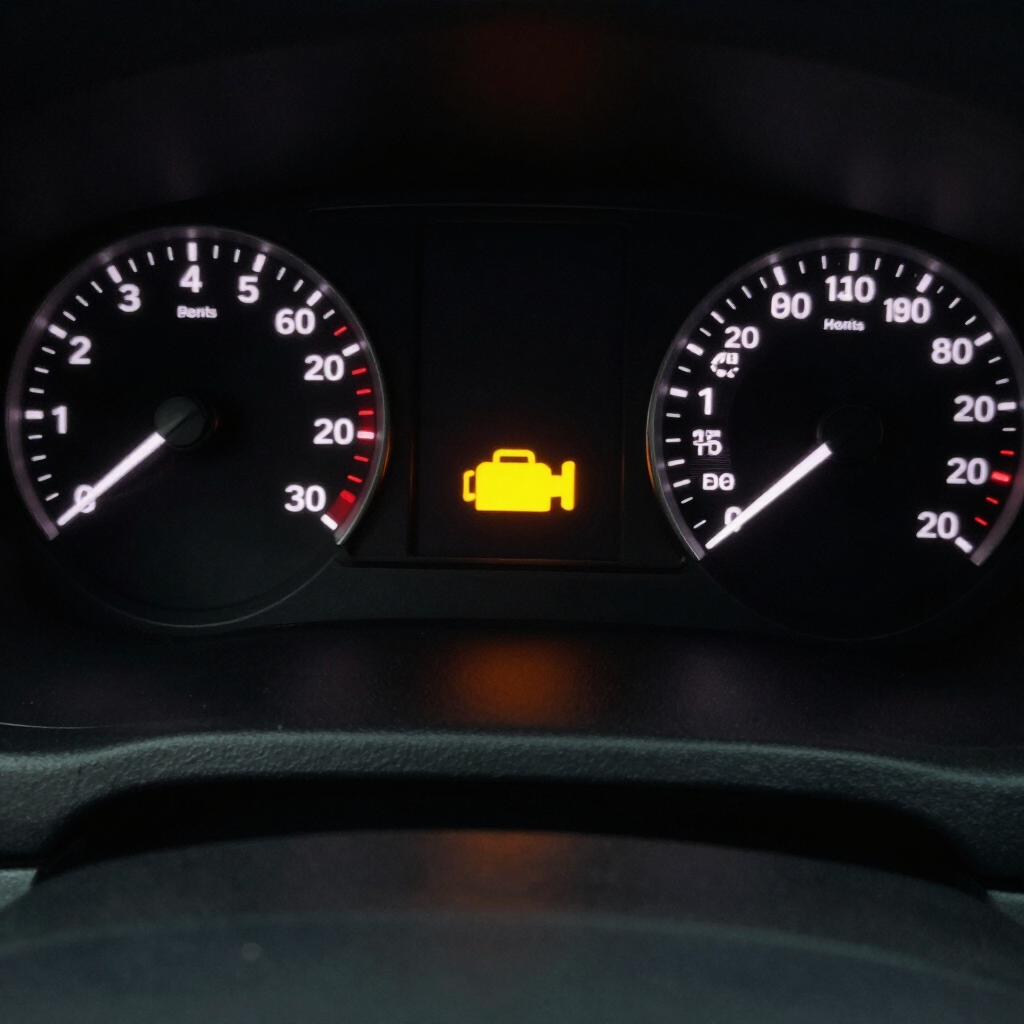
This is why a lit check engine light is such a common reason for failure. The light signals a stored fault that the test can read, often tied to the same systems emissions testing checks.
Common causes of an emissions failure include a faulty oxygen sensor, a failing catalytic converter, a leak in the evaporative emissions system, and whatever problem the check engine light is already flagging. A loose or faulty gas cap is a common cause of evaporative-system codes and is worth checking first.
If you fail the emissions test
- Read the failure report It tells you what the station found. Keep it, since it will help the technician and may matter later.
- Get a real diagnosis A code is a starting point, not a repair order. A technician should confirm the cause before replacing parts.
- Repair the cause and keep every receipt Itemized records of diagnosis, parts and labor are useful if you ever need to ask for a waiver.
- Retest DPS and station guidance says the retest window and any retest fee depend on the station. Ask before you leave, and check the current DPS rules.
- Ask about waivers only if repairs are costly DPS offers waivers and time extensions in limited cases. Whether repair costs count toward a waiver can depend on whether the work was done at a Recognized Emissions Repair Facility, so ask any shop about its status before you start.
Do not simply clear the code and hope. Clearing a code erases the information a technician needs, and it can leave the monitors unready, which can also fail a test.
How to avoid a failed test
Houston's heat and stop-and-go traffic are hard on engines and emissions parts, so a little prevention helps.
- Do not ignore a check engine light. Have it diagnosed well before your registration expires, not the week it is due.
- Tighten the gas cap until it clicks and inspect its seal if the light came on after fueling.
- Keep up with oil changes and tune-up items such as spark plugs, which affect how cleanly the engine burns fuel.
- If you recently disconnected the battery or cleared codes, drive normally for several days so the monitors can finish running before the test.
- Fix known misfires quickly. A flashing check engine light can damage the catalytic converter, which is one of the costlier emissions repairs.
Buying a used car without a safety inspection
Because a safety inspection is no longer a gate for registration, a passing sticker is no longer a signal that a used car is in good shape. If you are buying in the Houston area, a pre-purchase inspection by an independent shop is the way to learn about brakes, suspension, leaks and stored codes before you pay. In a flood-prone area, ask the shop to look for signs of water exposure as well.
Related: read our guide to check engine light diagnostic cost.
Book emissions help at Apex Automotive Care
Apex Automotive Care, 7050 Southwest Freeway, Houston, offers emissions testing, and if a vehicle does not pass, our technicians can diagnose the cause and provide a detailed repair estimate. We are ASE certified, we offer same-day availability, and repairs carry a 12-month, 12,000-mile warranty, whichever comes first.
Call (281) 502-2759 or book online.
Open Monday to Friday, 8:00 AM to 6:00 PM, and Saturday, 8:00 AM to 3:00 PM. Check engine light on? Have it diagnosed before your test.
Frequently asked questions
Does Texas still require a vehicle safety inspection?
Not for most personal vehicles. Texas ended safety inspections for non-commercial vehicles on January 1, 2025. Commercial vehicles still need one.
Do I still need an emissions test in Houston?
Yes, if your vehicle is registered in Harris County and is not exempt. You need a passing emissions test before you renew your registration.
What is the $7.50 inspection program replacement fee?
It is a fee paid with registration that replaces revenue once collected through safety inspections. It is not an increase in registration cost, according to DPS.
Can I pass an emissions test with the check engine light on?
Usually not. A lit check engine light typically results in a failed test, even if the car seems to run fine. Get it diagnosed and repaired first.
What are common reasons for failing emissions in Houston?
A faulty oxygen sensor, a failing catalytic converter, an evaporative system leak such as a bad gas cap, or an unresolved check engine light fault.
Should I clear the code before the test?
No. Clearing codes without a repair does not fix the problem, the light usually returns, and the monitors may not be ready for the test.
Sources
- Vehicle Safety Inspection Program Changes Now in Effect(Texas DPS)
- Cost of Inspection(Texas DPS)
- Fee Estimator(Harris County Tax Office)
- Waivers and Time Extensions(Texas DPS)
New Paragraph