Why Does My Car Smell Like Coolant? Causes, Leaks & Solutions | Houston Auto Repair
If your car suddenly smells like coolant, especially after driving or when you turn on the heater, it's a warning sign you shouldn't ignore.
Coolant, also called antifreeze, has a distinct sweet smell. If you can smell coolant around your vehicle or inside the cabin, there may be a coolant leak or another problem with the cooling system.
A small coolant leak can sometimes start with nothing more than an unusual smell. Over time, however, the leak can become larger and lead to low coolant levels, overheating, or potentially serious engine damage.
So, why does my car smell like coolant?
Common causes include a leaking radiator, damaged coolant hose, failing water pump, leaking thermostat housing, heater core problem, loose connection, or coolant spilling onto a hot engine component.
For drivers in Houston, a coolant problem deserves attention. Houston's hot weather can place additional demands on your vehicle's cooling system, making it especially important to keep the system properly maintained.
At Apex Automotive Care, we help drivers throughout Houston and surrounding communities diagnose coolant leaks, overheating concerns, and other automotive problems.
What Does Coolant Smell Like?
Coolant typically has a noticeable sweet or chemical-like smell.
You may notice the smell:
- After parking your vehicle
- While the engine is running
- After a longer drive
- When using the heater
- Around the front of the vehicle
- Inside the passenger cabin
- Near the engine compartment
If the smell is new or unusually strong, don't simply cover it up with an air freshener.
The smell may be telling you that coolant is escaping somewhere it shouldn't.
1. You May Have a Coolant Leak
The most common reason a car smells like coolant is a coolant leak.
Your vehicle's cooling system circulates coolant through the engine to help regulate operating temperature.
A leak can occur in many different places, including:
- Radiator
- Coolant hoses
- Water pump
- Thermostat housing
- Radiator connections
- Expansion tank or reservoir
- Heater core
- Other cooling-system components
A small leak may not always produce an obvious puddle underneath the vehicle.
Coolant can leak onto hot components and evaporate before it reaches the ground.
That means a coolant smell can sometimes be the first obvious sign of a leak.
2. A Damaged or Cracked Coolant Hose
Coolant hoses carry coolant between different parts of the cooling system.
Over time, hoses can become:
- Brittle
- Cracked
- Soft
- Swollen
- Damaged
- Loose at their connections
A small crack may only leak when the cooling system is under pressure.
You might notice the coolant smell after driving rather than while the vehicle is parked with a cold engine.
If a hose fails completely, a significant amount of coolant can be lost very quickly.
3. A Leaking Radiator
The radiator is an important part of your vehicle's cooling system.
It helps remove heat from the coolant before that coolant is circulated back through the engine.
A damaged radiator can develop a leak because of:
- Age
- Corrosion
- Physical damage
- Cracked tanks
- Damaged connections
- Failed seals
A radiator leak may cause a sweet coolant smell, low coolant levels, visible fluid, or an overheating engine.
If you suspect a radiator leak, have the cooling system inspected rather than continuing to drive and repeatedly adding coolant.
4. A Failing Water Pump
The water pump circulates coolant through the engine and cooling system.
When a water pump develops a leak or begins to fail, you may notice:
- Coolant smell
- Coolant leaking underneath the vehicle
- Engine overheating
- Temperature gauge rising
- Unusual noises
- Low coolant levels
A failing water pump can become a serious problem if ignored because proper coolant circulation is essential for engine temperature control.
Apex Automotive Care's Cooling System service covers inspection and service of important cooling-system components, including water pumps, radiators, hoses, thermostats, and coolant.
5. A Thermostat Housing or Seal Is Leaking
Your vehicle's thermostat helps regulate coolant flow and engine temperature.
Depending on the vehicle, the thermostat is installed within a housing that can develop leaks.
A damaged housing, gasket, or seal may allow coolant to escape.
You may notice a coolant smell without seeing a large puddle underneath the vehicle.
A technician can inspect the thermostat housing and surrounding components to determine whether coolant is escaping.
6. A Heater Core Problem
If you smell coolant inside the cabin, rather than just under the hood, a heater core problem is one possibility.
The heater core is part of the vehicle's heating and HVAC system and uses hot engine coolant to produce heat for the passenger compartment.
A leaking heater core can produce symptoms such as:
- Sweet coolant smell inside the vehicle
- Fogging or film on the inside of the windshield
- Damp carpet
- Low coolant level
- Poor heater performance
- Coolant leaking into the cabin
If you notice coolant odor inside the vehicle, don't ignore it.
The problem may require inspection of the heater core and related HVAC components.
7. Coolant May Have Spilled During Service
Not every coolant smell means there is an active leak.
If coolant was recently added or the cooling system was serviced, a small amount may have spilled around the engine compartment.
When the engine gets hot, the spilled coolant can produce a noticeable smell.
The smell should normally go away after the spilled coolant has been cleaned and evaporated.
However, if the smell continues for days or becomes stronger, the vehicle should be inspected for an active leak.
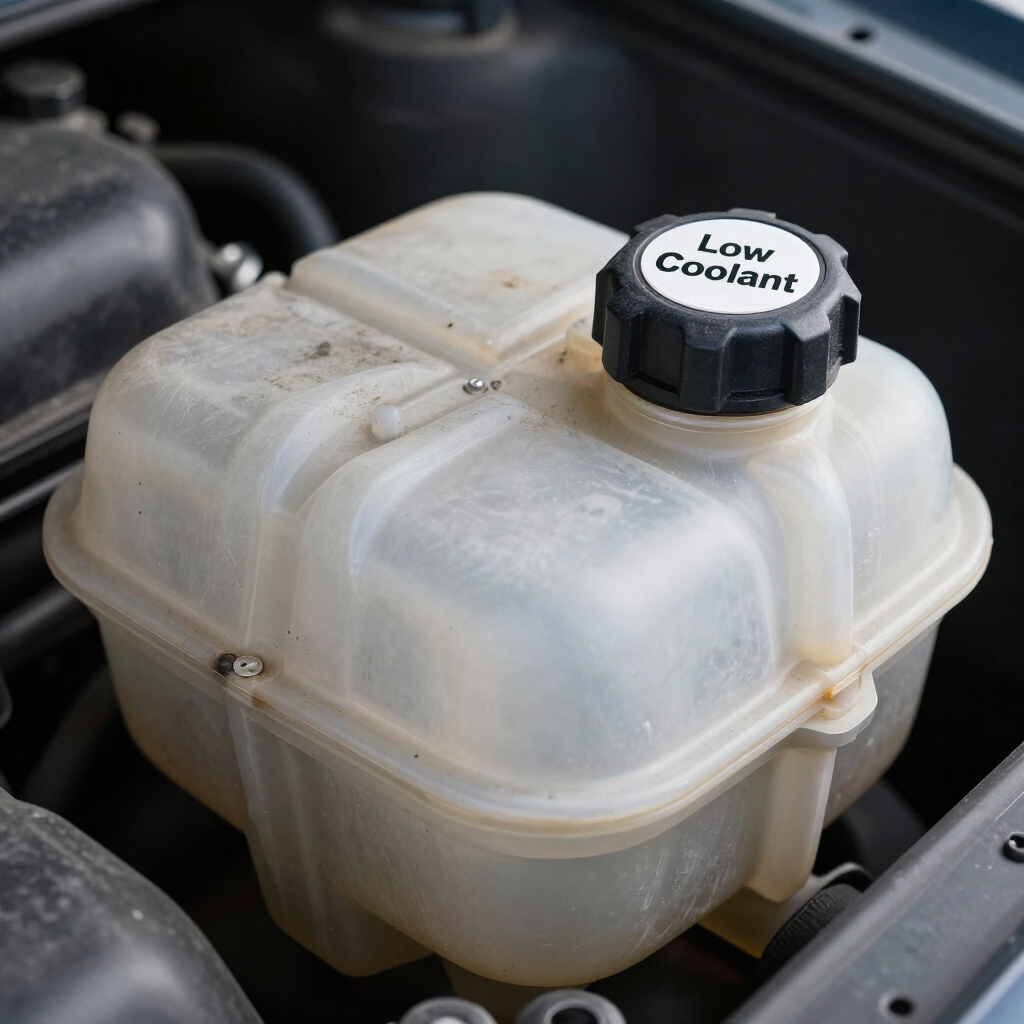
8. A Coolant Reservoir May Be Leaking
Many modern vehicles use a coolant expansion tank or reservoir.
If the reservoir becomes cracked or develops a leak around its cap, hose, or connection, coolant may escape.
Because the reservoir is part of the pressurized cooling system on some vehicles, a problem can result in coolant loss and potentially overheating.
Check the coolant level only when the engine is completely cool and follow your vehicle manufacturer's instructions.
Never remove a pressurized coolant cap from a hot engine.
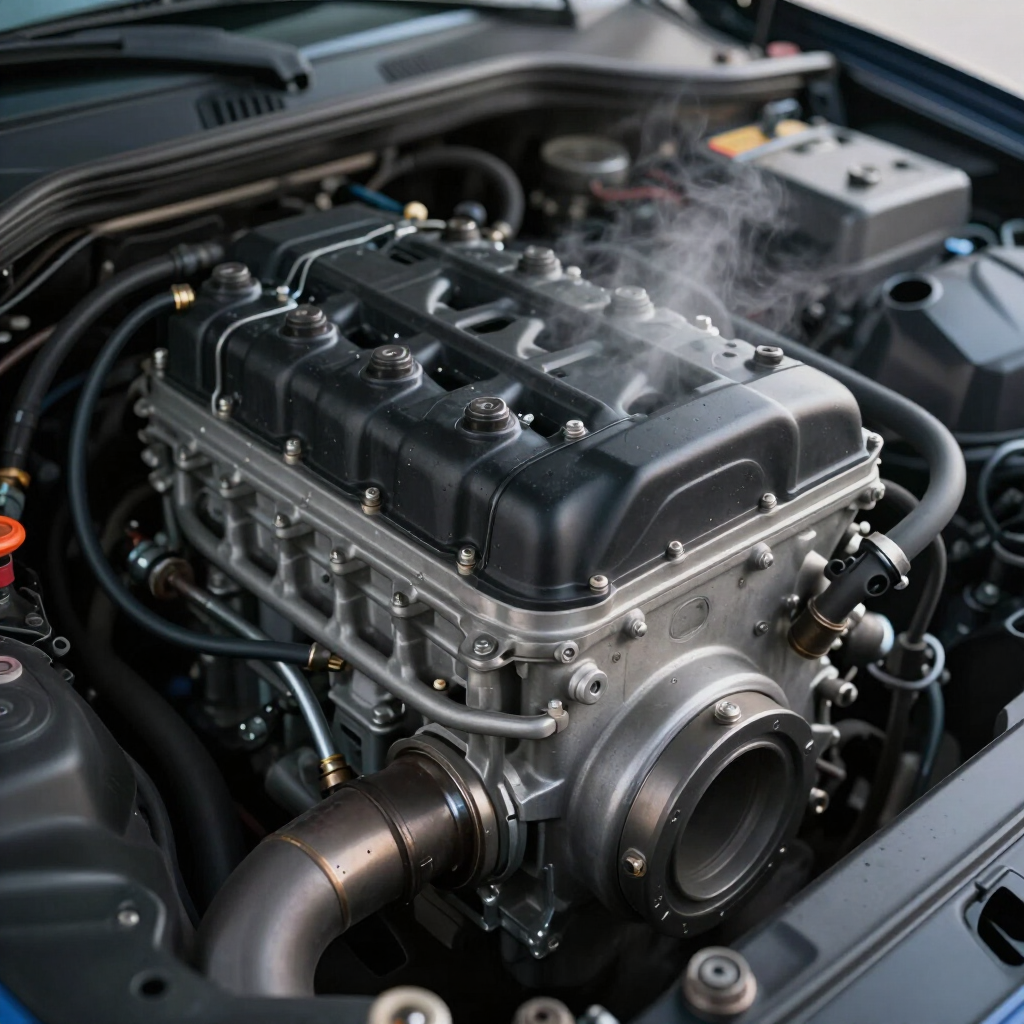
9. A Coolant Leak May Be Falling Onto a Hot Engine
Sometimes you may smell coolant without seeing coolant on the ground.
That's because coolant can land on a hot engine component and evaporate.
The smell can become particularly noticeable after you've been driving.
If you smell coolant after parking but can't find a puddle, don't assume there isn't a leak.
The source may simply be difficult to see.
Why Does My Car Smell Like Coolant But Isn't Overheating?
This is a common situation.
You may smell coolant but notice that the temperature gauge is still normal.
That doesn't necessarily mean everything is fine.
A small coolant leak can exist before the engine begins overheating.
In fact, identifying the problem while the vehicle is still operating at normal temperature can give you an opportunity to address the leak before coolant loss becomes severe.
A normal temperature gauge does not rule out a coolant leak.
If the smell is persistent, have the cooling system inspected.
Why Does My Car Smell Like Coolant After Driving?
If the coolant smell becomes stronger after driving, heat and pressure may be making the problem more noticeable.
As the engine reaches operating temperature, the cooling system becomes pressurized.
A small leak may become more apparent under those conditions.
After you park, heat from the engine can also make coolant residue or a small leak easier to smell.
If the smell consistently appears after driving, tell your technician exactly when you notice it.
Why Does My Car Smell Like Coolant Inside the Cabin?
A coolant smell inside the passenger compartment can point toward a problem involving the heater system.
One possibility is a leaking heater core.
Other signs may include:
- Sweet smell through the vents
- Windshield fogging
- Oily or unusual film on the glass
- Damp passenger-side carpet
- Reduced coolant level
- Heater problems
If coolant is entering the cabin, the vehicle should be inspected promptly.
Is a Coolant Smell Dangerous?
A coolant smell shouldn't automatically be considered an emergency, but it shouldn't be ignored either.
The bigger concern is why you're smelling coolant.
If the smell is caused by an active leak, continued coolant loss can eventually cause the engine to overheat.
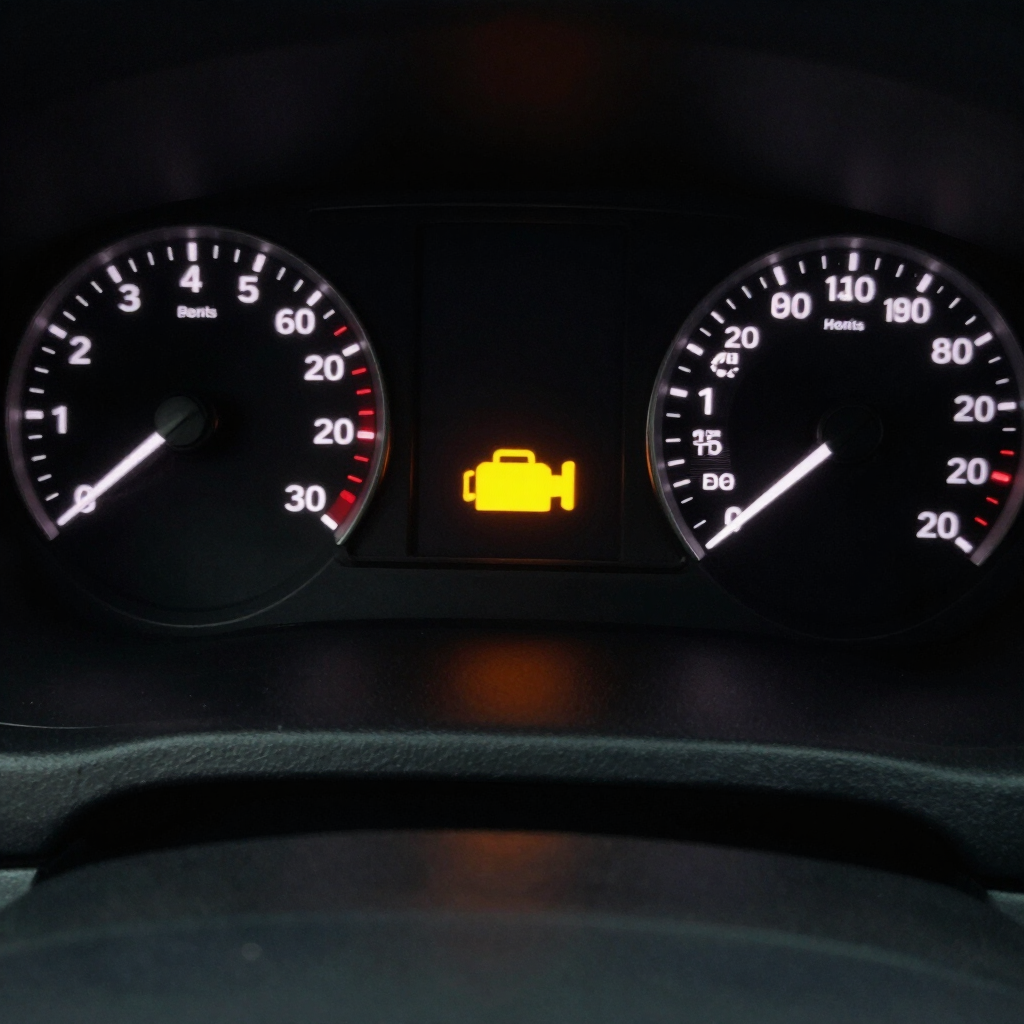
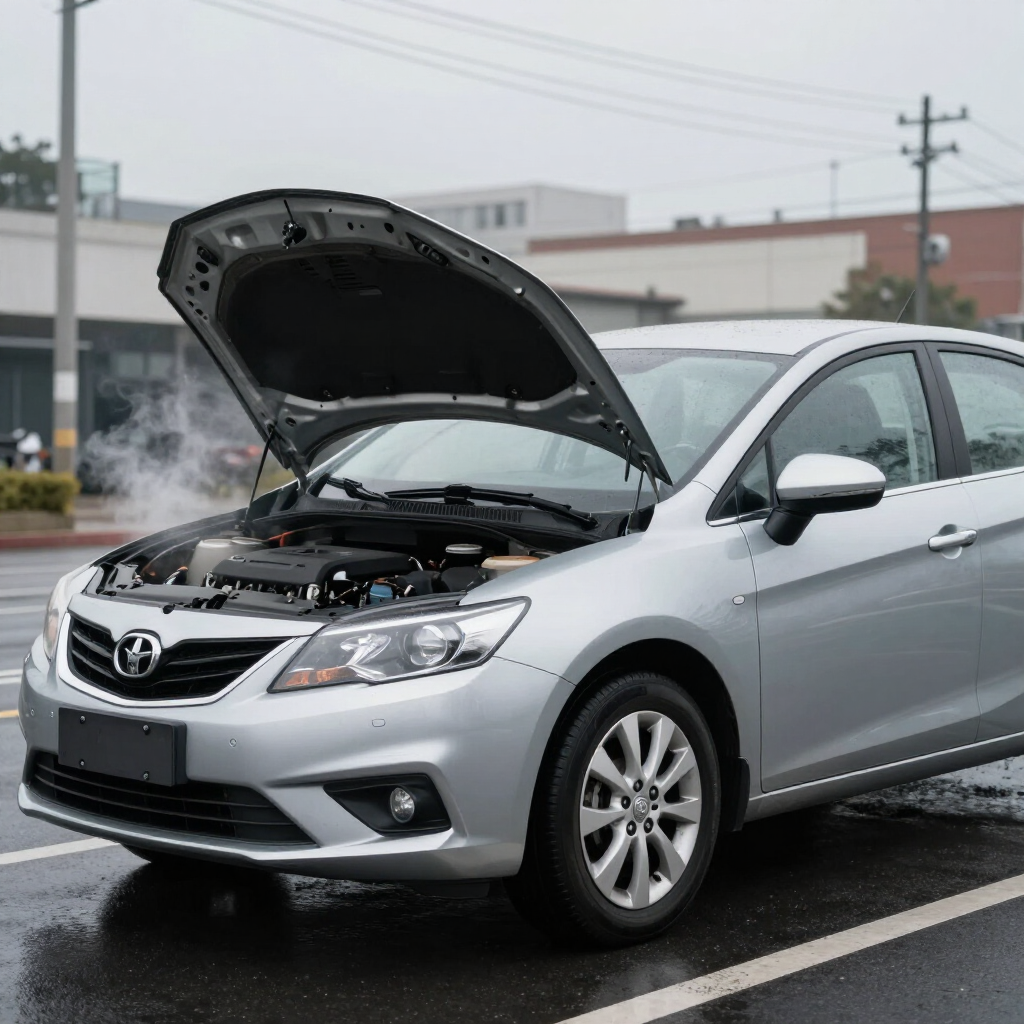
If your temperature gauge rises into the hot range, a temperature warning light comes on, you see steam, or the vehicle begins overheating, stop driving when it is safe to do so.
Continuing to operate an overheating engine can result in expensive damage.
Can I Drive My Car If It Smells Like Coolant?
It depends on the severity and cause of the problem.
If you smell coolant but the vehicle is operating normally and the coolant level remains stable, you should still arrange an inspection soon.
However, do not continue driving if you notice:
- Engine overheating
- Steam coming from under the hood
- Rapid coolant loss
- Temperature warning light
- A large coolant leak
- Severe engine performance problems
If you're unsure whether the vehicle is safe to drive, it's better to have the problem professionally evaluated.
What Color Is Coolant?
Coolant can come in different colors depending on the formulation and vehicle manufacturer.
Common colors include:
- Green
- Orange
- Yellow
- Pink
- Blue
Color alone isn't a reliable way to identify the exact type of coolant your vehicle needs.
Always use the coolant specified for your vehicle and follow the manufacturer's recommendations.
Avoid mixing coolant types unless the manufacturer specifically allows it.
Can Low Coolant Cause My Car to Overheat?
Yes.
The cooling system needs an adequate amount of coolant to properly transfer heat away from the engine.
If coolant is leaking and the level becomes too low, the cooling system may not be able to regulate engine temperature properly.
That can result in overheating.
This is why a coolant smell shouldn't be ignored even if your vehicle currently appears to be running normally.
How Is a Coolant Leak Diagnosed?
Finding a coolant leak isn't always as simple as looking for a puddle.
A technician may inspect:
- Radiator
- Coolant hoses
- Hose connections
- Water pump
- Thermostat housing
- Coolant reservoir
- Radiator cap
- Heater core
- Cooling-system components
- Signs of dried coolant residue
- Areas around the engine where coolant may be leaking
A cooling-system pressure test may also be used when appropriate to help identify leaks.
The exact diagnostic process depends on the vehicle and symptoms.
Why You Shouldn't Just Keep Adding Coolant
If your coolant level keeps dropping, adding more coolant may only temporarily address the symptom.
It doesn't fix the underlying problem.
If coolant is escaping because of a damaged hose, radiator, water pump, thermostat housing, heater core, or another component, the leak needs to be identified and repaired.
Repeatedly driving a vehicle with low coolant can increase the risk of overheating.
Can Regular Maintenance Help Prevent Cooling System Problems?
Regular maintenance can help identify cooling-system problems before they become major issues.
Your vehicle's maintenance schedule may include coolant inspections, fluid services, filter replacement, and other checks.
Apex Automotive Care offers Factory Scheduled Maintenance in Houston, following manufacturer maintenance guidelines.
Our General Vehicle Maintenance service can also help with routine vehicle maintenance needs.
Coolant Leak & Cooling System Repair in Houston, TX
If your car smells like coolant, Apex Automotive Care can help determine where the smell is coming from.
Our team can inspect your vehicle's cooling system and look for signs of coolant leaks, damaged components, or other problems that could eventually lead to overheating.
Apex Automotive Care is located at:
7050 Southwest Freeway
Houston, TX 77074
Phone: (713) 779-9140
We serve drivers throughout Houston and surrounding communities, including Westchase, Bellaire, Meyerland, Stafford, Sugar Land, Missouri City, and Southwest Houston.
Auto Repair Near Westchase
If you're searching for auto repair near Westchase because your vehicle smells like coolant, don't ignore the odor.
A small leak can become a much bigger problem if coolant loss continues.
Have the cooling system inspected to identify the source.
Auto Repair Near Bellaire
For drivers in Bellaire, a sweet coolant smell after driving can be an early warning sign of a cooling-system problem.
Even if your temperature gauge looks normal, it's worth having the vehicle checked if the smell continues.
Auto Repair Near Meyerland
If you're in Meyerland and notice a coolant smell around your vehicle or inside the cabin, pay attention to any changes in coolant level.
A persistent odor should be investigated before it leads to overheating.
Auto Repair Near Stafford
Drivers searching for auto repair near Stafford who notice coolant smells should have the cooling system inspected.
A leaking hose, radiator, water pump, thermostat housing, or another component could be responsible.
Auto Repair Near Sugar Land
If your car smells like coolant in Sugar Land, don't wait until the temperature gauge reaches the red zone.
Early diagnosis can help identify coolant leaks before they result in more serious cooling-system problems.
Auto Repair Near Missouri City
For drivers in Missouri City, a coolant odor inside the cabin can be particularly important to investigate.
If you notice a sweet smell through the vents, windshield fogging, or damp carpeting, have the HVAC and cooling systems inspected.
Auto Repair in Southwest Houston
If you're looking for auto repair in Southwest Houston, Apex Automotive Care is conveniently located at 7050 Southwest Freeway, Houston, TX 77074.
We help drivers diagnose coolant leaks, overheating concerns, and other vehicle problems.
Frequently Asked Questions About Coolant Smells
Why does my car smell like coolant?
A coolant smell is commonly caused by a leak or coolant residue. Possible sources include hoses, radiators, water pumps, thermostat housings, reservoirs, or the heater core.
Why does my car smell like coolant but isn't leaking?
A small leak may evaporate on a hot engine before reaching the ground. Coolant may also have recently spilled during service.
Why does my car smell like coolant after driving?
Heat and cooling-system pressure can make a small leak more noticeable after the vehicle reaches operating temperature.
Why do I smell coolant inside my car?
A coolant smell inside the cabin can potentially indicate a heater core leak, especially if you also notice windshield fogging, damp carpet, or low coolant levels.
Can a coolant leak cause overheating?
Yes. If enough coolant is lost, the cooling system may not be able to properly regulate engine temperature, potentially causing overheating.
Can I drive if my car smells like coolant?
If the vehicle is not overheating and the coolant level is stable, arrange an inspection soon. If the vehicle is overheating, steaming, rapidly losing coolant, or showing a temperature warning, stop driving when safe.
What should I do if my temperature gauge is high?
Safely pull over and turn the engine off. Do not open a hot radiator or pressurized coolant reservoir cap. Allow the vehicle to cool and have the cooling system inspected.
How do I know if my water pump is leaking?
Possible signs include coolant odor, visible coolant, low coolant level, overheating, and sometimes unusual noises. Proper inspection is needed to confirm the cause.
Can a bad radiator cause a coolant smell?
Yes. A leaking radiator can allow coolant to escape and produce a noticeable coolant odor.
Should I keep adding coolant if the level is low?
Adding the correct coolant may temporarily restore the level, but if coolant continues to disappear, the source of the loss should be diagnosed and repaired.
Schedule Cooling System Service in Houston
If your car smells like coolant, don't wait for it to start overheating.
A coolant smell can be an early warning sign of a leak or cooling-system problem. Finding and repairing the source early can help prevent a much more serious problem down the road.
📍
Apex Automotive Care
7050 Southwest Freeway
Houston, TX 77074
📞 (713) 779-9140
Serving Houston, Southwest Houston, Westchase, Bellaire, Meyerland, Stafford, Sugar Land, and Missouri City.
👉
Schedule your appointment online:
Schedule Auto Repair at Apex Automotive Care
Don't ignore a sweet coolant smell. Get the cooling system checked before a small leak turns into an overheating problem.